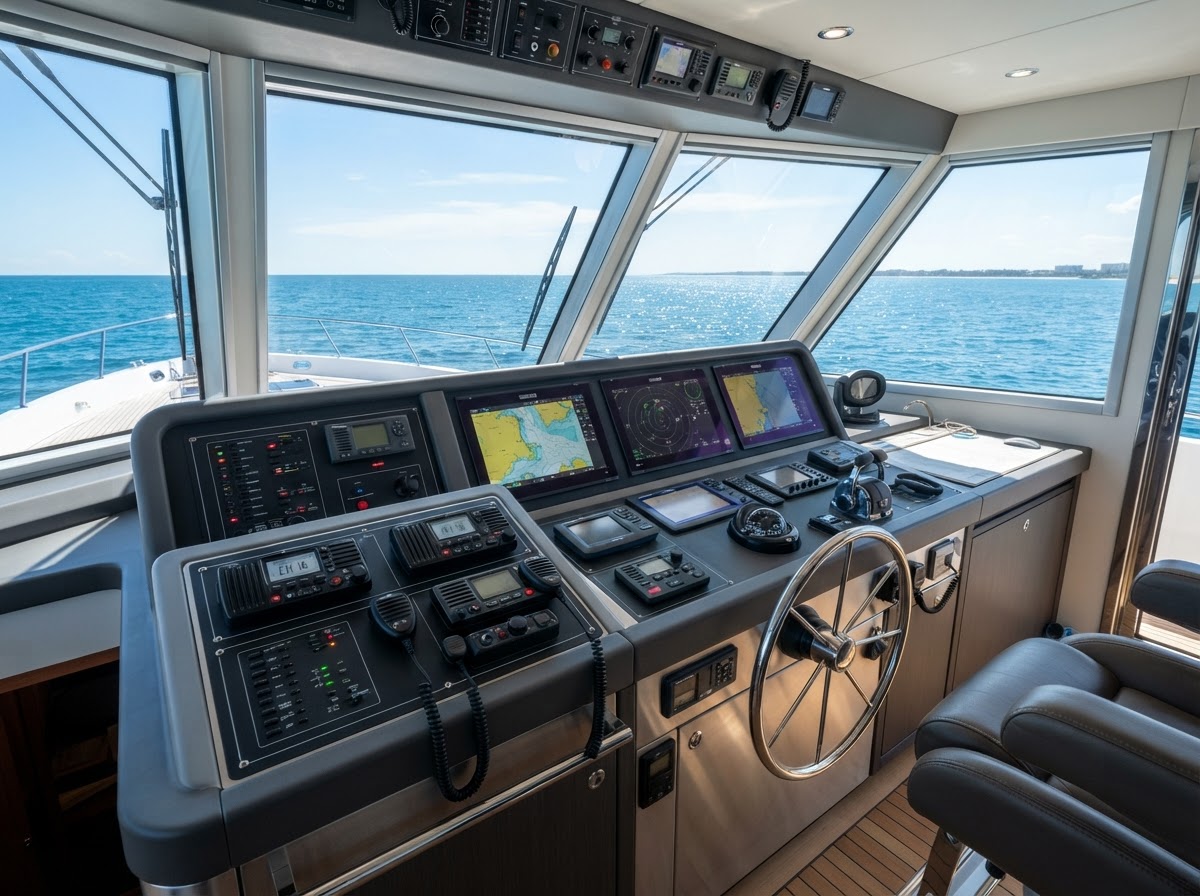
Your Most Important Safety Tool
In an era of satellite phones, Starlink, and AIS, it's easy to forget about the humble VHF radio. But here's the truth: VHF is still the primary means of communication on the water, and it's still the fastest way to get help in an emergency. When something goes wrong offshore, your first call isn't to a satellite 500 miles away. It's to the vessel two miles off your beam that can reach you in ten minutes.
Every captain should know the basics of VHF operation, and in 2026, that means understanding DSC, AIS integration, and the latest equipment options. Let's break it down.
Channel Etiquette: The Basics
Channel 16 is the international hailing and distress channel. You monitor it whenever your radio is on, and you use it to establish contact with another vessel before switching to a working channel. It's not for conversation. Make contact, agree on a working channel (68, 69, 71, 72, or 78 are common), switch, and keep 16 clear.
Channel 13 is the bridge-to-bridge channel used for navigation and passing arrangements with commercial vessels. Channel 22A is used by the Coast Guard for broadcasts after hailing on 16. And channel 70 is the DSC-only channel. You don't use it for voice, only for digital selective calling.
DSC: Digital Selective Calling
DSC is the single most important feature on a modern VHF radio, and too many captains don't know how to use it. With DSC, you can send a digital distress alert at the press of a button. That alert includes your vessel's MMSI (Maritime Mobile Service Identity) number, your position (if your radio is connected to GPS), and the nature of the distress. Every DSC-equipped vessel within range receives the alert automatically.
The distress button on the back of your VHF transmits at 25 watts, the maximum power for VHF. When you press it, the Coast Guard and every vessel in the area know immediately who you are, where you are, and that you need help. Compare that to a voice mayday on Channel 16, which requires someone to be listening, to hear you, and to copy your position correctly. DSC takes the human error out of the equation.
To use DSC, you need an MMSI number, which you can get from the FCC or from organizations like BoatUS (for recreational vessels). You program it into your radio once, and it's part of every DSC call you make. If you buy a used radio, make sure the previous owner's MMSI has been cleared. You don't want your distress calls going out under someone else's identity.
AIS Integration
AIS (Automatic Identification System) broadcasts your vessel's position, course, speed, and identity to other vessels and receives the same information from them. Integrating AIS with your VHF radio adds a powerful safety layer: you can see nearby vessels on your chartplotter and call them directly by DSC using their MMSI, which is displayed alongside their AIS target.
Icom's latest radios, like the IC-M94D, integrate Class B AIS and Class D DSC into a single unit. That means you get AIS receive capability and DSC distress calling in one box, without needing a separate AIS transponder. For smaller vessels, this is a cost-effective way to get both safety features. For larger yachts, a dedicated AIS transponder connected to your NMEA 2000 network is still the way to go.
Choosing a VHF Radio in 2026
The minimum you should look for in 2026 is Class D DSC capability, which means the radio can monitor Channel 70 for DSC calls while simultaneously listening to Channel 16. Beyond that, look for GPS integration (either built-in or via NMEA 2000), AIS receive capability, and waterproof rating (IPX7 or better).
Icom remains the gold standard for VHF radios. The IC-M94D combines VHF, AIS, and DSC in a handheld unit. For fixed-mount installations, the IC-M510E offers NMEA 2000 connectivity, integrated AIS, and smartphone integration for remote control. Standard Horizon and Cobra also make capable radios at lower price points.
Whatever you choose, make sure it's installed properly. A VHF radio is only as good as its antenna and its power supply. A cheap radio with a great antenna will outperform an expensive radio with a poor one.
Antenna and Range Reality Check
VHF radio is line-of-sight, which means your range is determined by antenna height. The formula is roughly: range in miles = 1.23 × (√antenna height in feet + √target antenna height in feet). A radio with a 10-foot antenna talking to a Coast Guard station with a 100-foot tower has a range of about 15 miles. Two vessels with 8-foot antennas can communicate at about 7 miles.
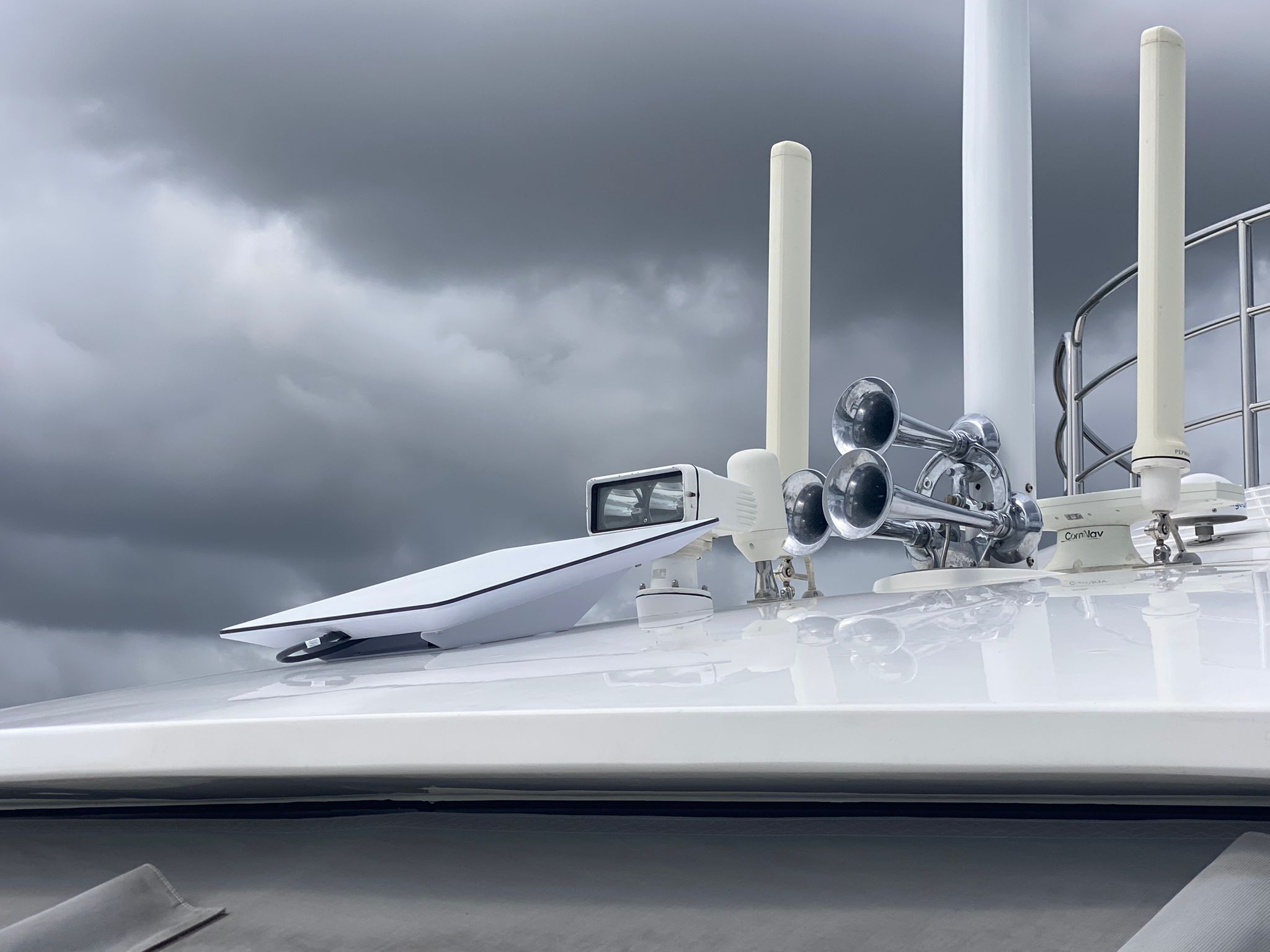
This is why antenna height matters more than radio power. A 25-watt radio with a 4-foot antenna won't reach as far as a 5-watt radio with a 20-foot antenna. Invest in a quality antenna, mount it as high as practical, and make sure the coax cable run is as short as possible with quality connectors.
The Bottom Line
VHF radio is your most important safety tool on the water. Know your channels, know how to use DSC, make sure your radio is connected to GPS, and consider AIS integration. A properly installed VHF radio with a quality antenna can save your life, and it's the one piece of equipment every vessel should have in perfect working order.
If you need a VHF installation, an AIS upgrade, or just want to make sure your current radio is set up correctly, give us a call. We'll make sure your communication system is ready when you need it most.
Questions about your vessel's electronics?
Our team is on the dock and ready to help. Call us or schedule a free vessel consultation today.