Radar Tells You Something Is There. FLIR Tells You What It Is.
Radar is one of the most important safety tools on any vessel, but it has a limitation: it tells you that something is out there, but it can't tell you what it is. A marker buoy, a small boat, a floating container, and a kayaker all look roughly similar on a radar screen. When you're running at night or in fog, that ambiguity can be dangerous.
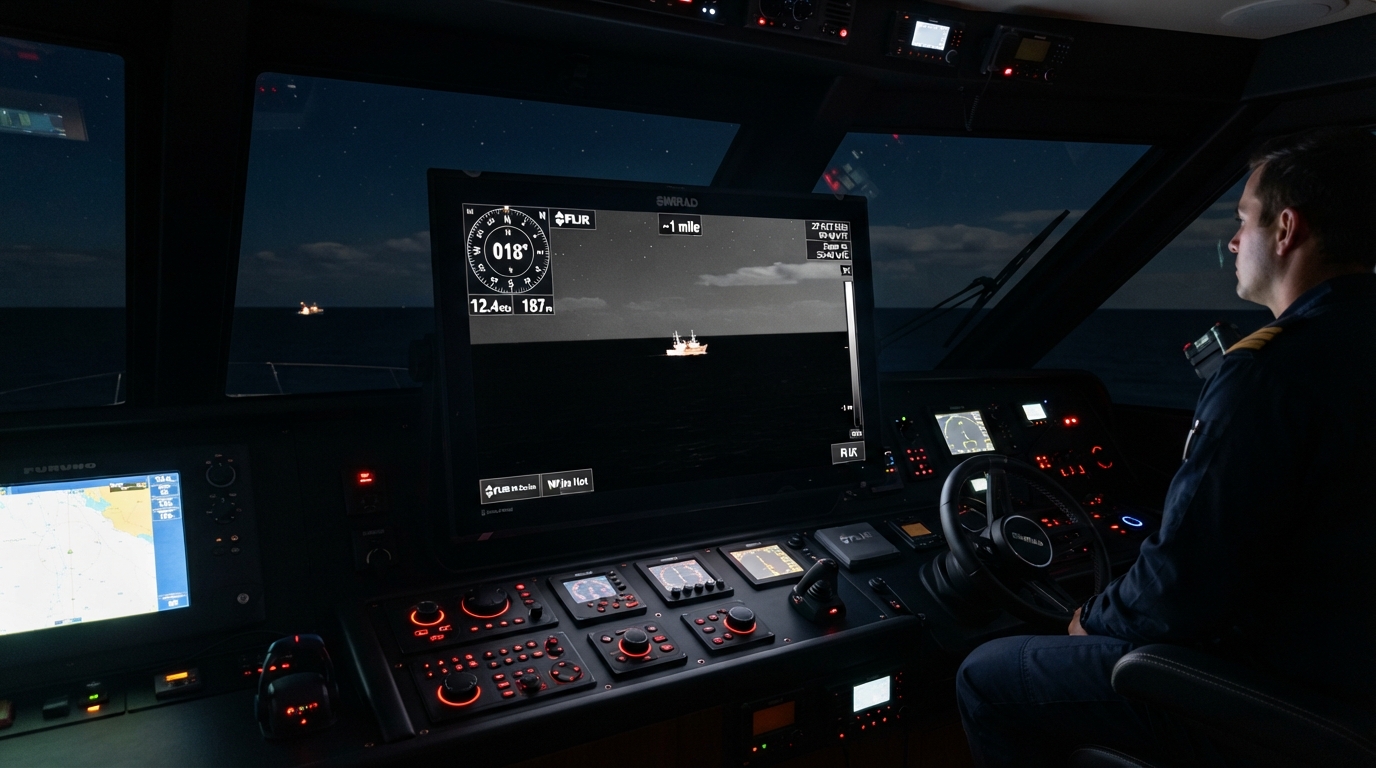
Thermal imaging changes the equation. A FLIR camera detects heat, not light, which means it can see in total darkness, through glare, and in conditions where your eyes and your radar both struggle. It turns a vague blob on the radar into a clear picture of what's actually in the water ahead of you.
How Thermal Imaging Works on the Water
Everything with a temperature above absolute zero emits infrared radiation. FLIR cameras capture that radiation and translate it into a visible image. On the water, this is incredibly useful because almost everything you need to see is either warmer or cooler than the water around it. A person in the water is warmer. A running boat engine is warmer. A channel marker has a different thermal signature than the water it sits in.
The result is a clear, real-time image of what's ahead of you, regardless of lighting conditions. You can see other vessels, navigation aids, debris, and people in the water, all without a single photon of visible light.
Choosing the Right FLIR Model
FLIR's marine lineup ranges from handheld monoculars to fully stabilized, fixed-mount camera systems. The right choice depends on your vessel and how you use it.
The FLIR M364C is a popular choice for mid-size yachts. It offers pan-and-tilt control, 2-axis gyro stabilization, and an ultra-low-light visible sensor alongside the thermal core. That dual-sensor approach means you get thermal imaging for total darkness and a low-light camera for dawn and dusk conditions.
For larger vessels and superyachts, the FLIR M560 is the flagship. It features a cooled MWIR sensor with 14.9x zoom, 4K ultra-low-light imaging, and AI tracking that can lock onto and follow targets automatically. It's a serious piece of equipment for vessels that operate in demanding conditions.
Mounting Location Matters
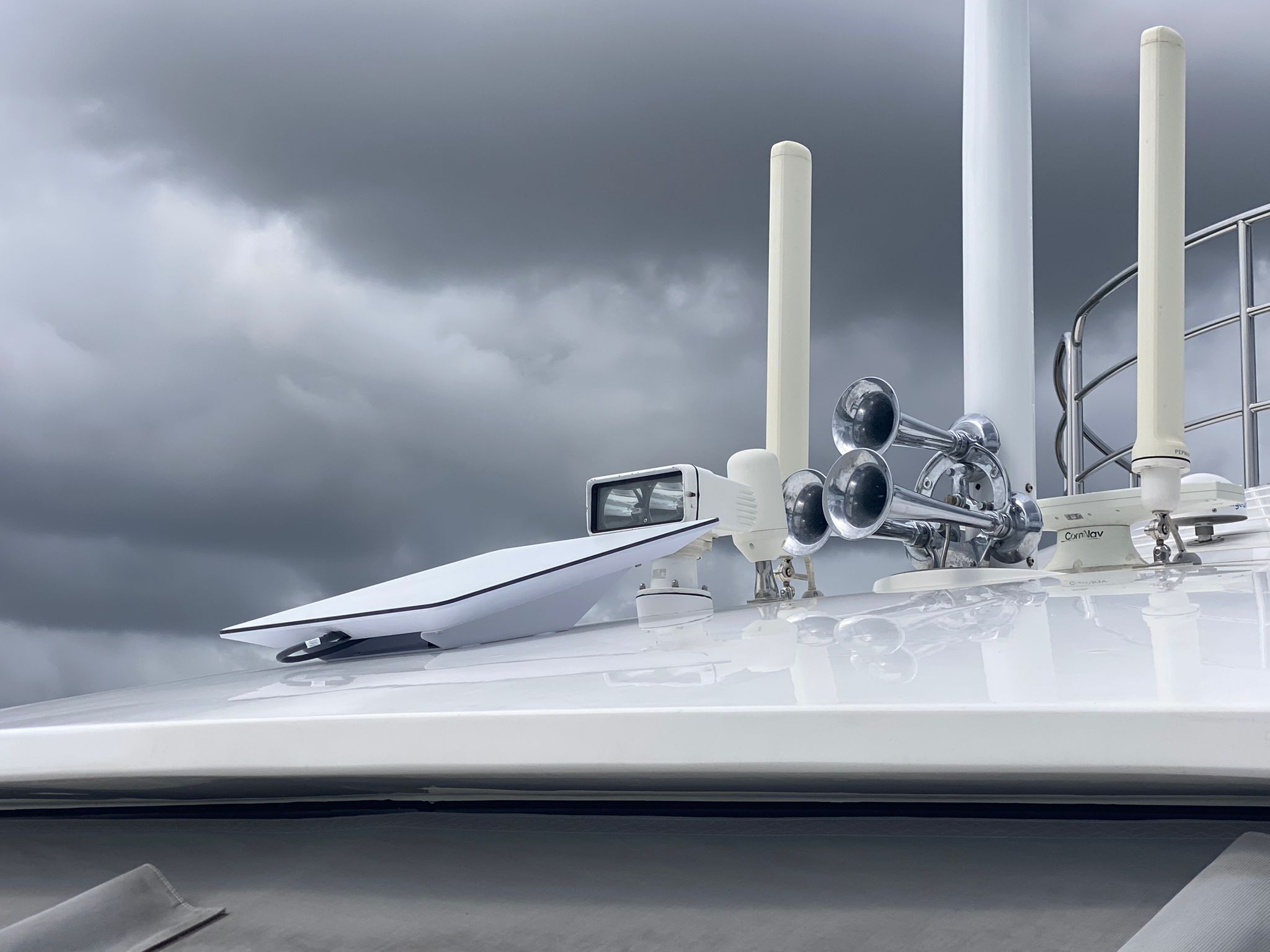
Where you mount the camera determines what you can see. The higher the mount, the farther the horizon you can see, but the harder it is to see objects close to the boat. Most installations go on the hardtop, radar arch, or flybridge. High enough for a good field of view, but not so high that close-range targets disappear below the camera's downward limit.
The camera needs a clear forward view, so it shouldn't be mounted behind a mast, light, or other obstruction. And because it's a precision optical instrument, it needs a solid mount that won't vibrate or flex in rough seas. A shaky mount produces a shaky image, which defeats the purpose.
Integration with Your Chartplotter
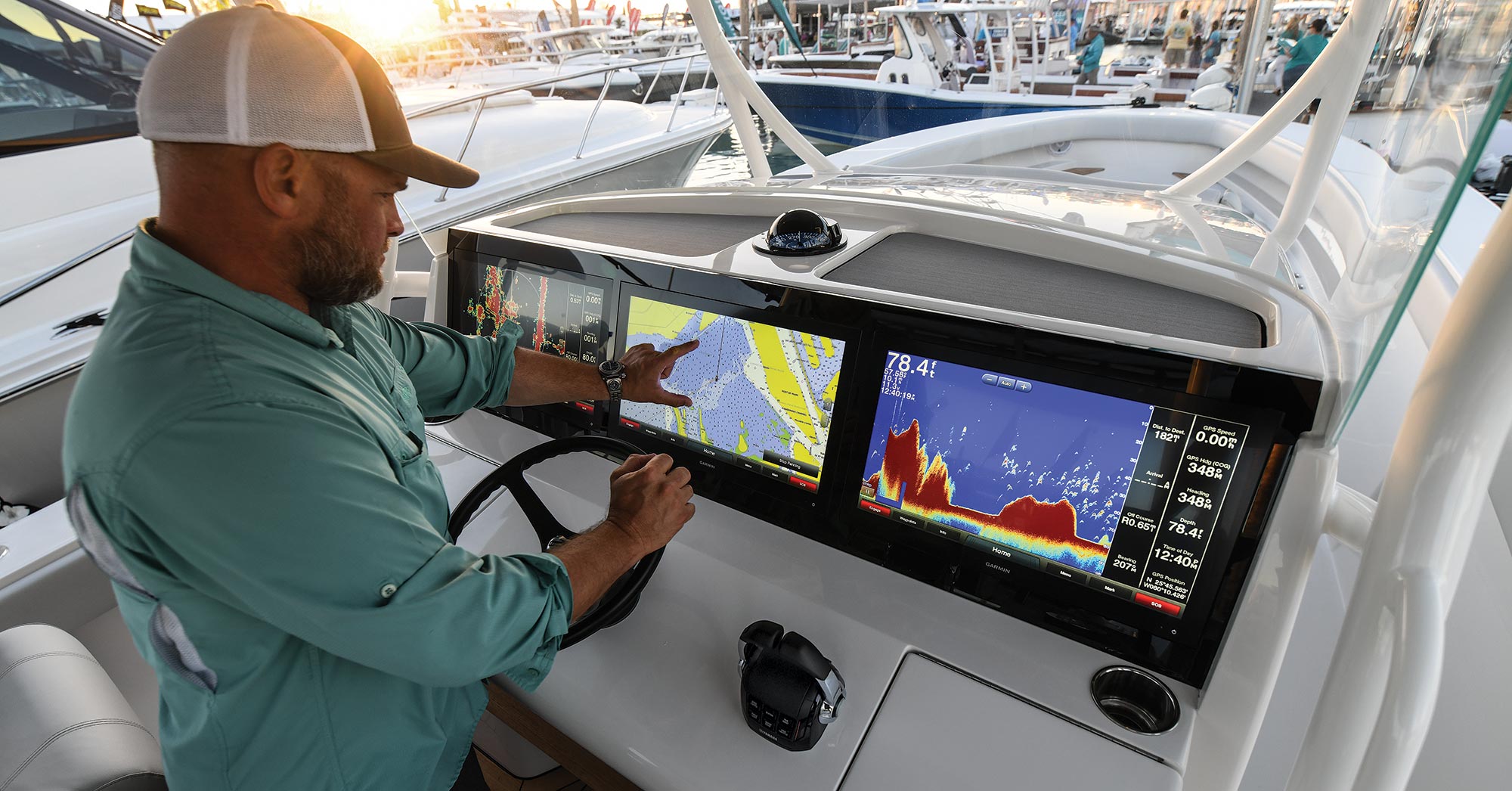
Most FLIR marine cameras connect to your chartplotter with just two cables: a power cable providing 12V or 24V DC, and a high-speed ethernet cable for data. The thermal image can be displayed directly on your Garmin, Furuno, or Simrad screen, so you don't need a separate monitor at the helm.
On Garmin systems, FLIR integrates through the Garmin Marine Network. On Furuno, it integrates via the NavNet network. In both cases, you can control the camera's pan, tilt, and zoom from your chartplotter touchscreen, and overlay the thermal image alongside your chart and radar views.
When FLIR Earns Its Keep
Thermal cameras aren't a novelty. They're a safety tool that pays for itself the first time you need it. Running an inlet at night with unlit markers. Navigating through a fleet of lobster pots in the dark. Searching for a person in the water. Spotting a partially submerged container that radar would miss. These are the moments when a FLIR camera goes from a nice-to-have to a critical piece of safety equipment.
Insurance companies are increasingly recognizing thermal imaging as a safety upgrade, and some offer reduced premiums for vessels equipped with FLIR. Check with your marine underwriter. The discount may help offset the cost.
The Bottom Line
Radar tells you where. FLIR tells you what. Together, they give you complete situational awareness in any condition. If you operate your vessel at night, in fog, or in any condition where visibility is compromised, a FLIR thermal camera is one of the best safety investments you can make.
We install FLIR systems on everything from center consoles to mega-yachts. If you're considering adding thermal imaging to your vessel, give us a call. We'll help you choose the right model and mount it where it'll do the most good.
Questions about your vessel's electronics?
Our team is on the dock and ready to help. Call us or schedule a free vessel consultation today.